August 5, 2020
by Azad Alik
By Axel B. Corlu, Ph.D.
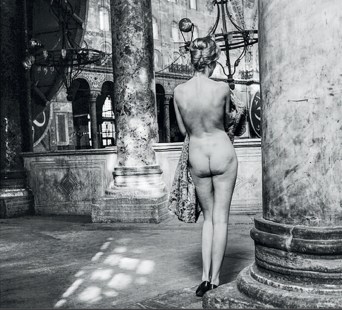
The recent reconversion of the Hagia Sophia into a mosque by the Erdogan regime generated heated debates among scholars, politicians, and the public. A recent article by Patricia Blessing and Ali Yaycioglu, titled “Beyond Conquest Narratives: Hagia Sophia, Past and Present” offers sophisticated but ultimately convenient universalism, where both the past and the present are presented from a distorted lens, with strategic omissions.[1]
According to Blessing and Yaycioglu, there is a binary “conquest narrative” that both the supporters and opponents of the Hagia Sophia reconversion utilize, and that in essence this simplistic view does not reflect the “complex history of Ottoman Hagia Sophia.” The authors go on to label the concerns about the protection of the structure, especially regarding the issue of the mosaics as ahistorical “disinformation,” and offer a “correct” version of history.
I will follow their text in the same order, and point out the multiple issues.
First, the authors begin by stating that Ali Erbaş, the Director of Religious Affairs, ascended the minbar “decorated with green standards, holding a sword…” For a text that opposes the “conquest narrative,” it is remarkable that the meaning of the green standards (as clear and unambiguous a reference to conquest as possible) and the symbolic –albeit bumbling—attempt to hold the sword in the left hand (as a gesture of “peace”)[2], is left unmentioned. The authors inform us that the sword, as a symbol, was not associated with conquest, but the ruler in the Ottoman context. This is quite debatable; Ottoman sultans have been depicted in many different poses, adorned with rich symbolism that incorporates multiple elements. In the case of Mehmed II himself, a famous portrait from the Topkapi Palace Museum, attributed to Siblizade Ahmed, shows him smelling a rose in his right hand, which also features a zihgir, a thumb ring used in Oriental archery, on his thumb.
read more »
Posted in A_A in ENGLISH, History, Intellectuals, Minority Politics, Minority Rights, Politics, Politics of Commemoration, Politics of Knowledge, Politics of Past, Public Sphere, Religious Freedom, Secularism, Structural Inequality, Turkish Politics |
2 Comments »
January 4, 2015
by Azad Alik
james_gordon_losangeles @ Flickr
Nancy Kricorian** (@nancykric)
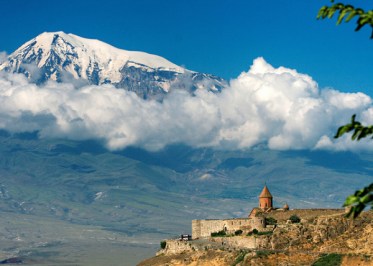
Before I leave home, I come up with a title for the Armenian Heritage Trip to Turkey: Twenty Armenians on a Bus, or The Thirty Handkerchief Tour. Our guide calls it a pilgrimage, and refers to us as pilgrims, as though we are on a religious or spiritual quest. What do I hope to find? Almost one hundred years have passed since my paternal grandmother and her family were driven from their home in Mersin in 1915, just a few months into the Ottoman government’s genocidal campaign that resulted in the deaths and exile of the vast majority of its Armenian citizens. Of her immediate family, only my grandmother and her brother survived the death march. They were among eight thousand Armenian orphans in a camp in the Syrian desert at Ras al-Ain.
read more »
Posted in Activism, Armenian History, Armenian Literature, A_A in ENGLISH, Human Rights, Memoirs, Minority Rights, Politics, Public Sphere, Religious Freedom, Structural Inequality, Structural Racism, Turkish History, Turkish Literature, Zorunlu Goc |
Leave a Comment »
September 19, 2014
by Azad Alik
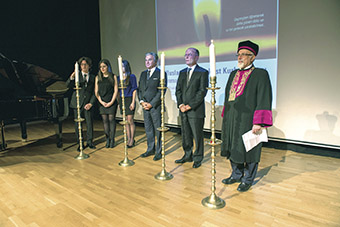
Commemoration of the International Holocaust Remembrance Day on January 27 at Kadir Has University in Istanbul, Turkey. (Photo: courtesy of Șalom newspaper in Turkey)
Corry Guttstadt
This year marks the first time that the International Holocaust Remembrance Day on January 27, the day of the liberation of Auschwitz by the Red Army, was commemorated in Turkey in a semi-official manner.[1] The Deputy Foreign Secretary, Naci Koru, attended a ceremony at Kadir Has University; Foreign Secretary Ahmet Davutoğlu and the secretary in charge of EU membership negotiations, Mevlüt Çavușoğlu, sent statements but were not present in person. It is astounding that both the Turkish-Jewish newspaper Șalom and several English-language newspapers and blogs reported almost gushingly on the ceremony. Yet, if one reads these politicians’ statements, it becomes evident that the Holocaust Remembrance Day is misappropriated here in order to – once again – deny the existence of anti-Semitism, as well as of racism and discrimination in general, in Turkey, to celebrate the myth of Turkey’s “rescue of the Jews,” and to deny the Armenian genocide.
read more »
Posted in Apologies, Armenian History, A_A in ENGLISH, History, History of Holocaust, Jewish History, Jewish Literature, Minority Politics, Minority Rights, Politics, Politics of Past, Public Sphere, Turkish History, Turkish Politics, World History, World Politics |
1 Comment »
January 17, 2014
by Azad Alik
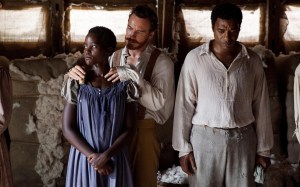
A scene from “12 Years a Slave.” From left: Lupita Nyongo, Michael Fassbender and Chiwetel Ejiofor (http://goo.gl/w5cijB)
Willie Osterweil
The Academy Awards have made progress in terms of racial representation. This year a film about slavery is the clear front-runner in many of the major categories, and if “12 Years a Slave” or “Gravity” wins best picture, it would be the first time a movie by a nonwhite director takes the prize. It’s also possible that Lee Daniels (“The Butler”) could join Steve McQueen (“12 Years”) and Alfonso Cuaron (“Gravity”) to make best director a majority-minority category for the first time ever.
read more »
Posted in African American Films, African American History, African American Literature, American Film History, American Films, American History, American Politics -Federal, Arts, A_A in ENGLISH, Film, History of Slavery, Intellectuals, Minority Rights, Politics, Politics of Knowledge, Public Sphere, Racism, Structural Inequality, Structural Racism |
Leave a Comment »
January 21, 2013
by Ayda Erbal
Seeing Hrant’s lifeless body on a very familiar sidewalk in Istanbul prompted nightmares that every member of the Armenian community in Turkey consciously or unconsciously suppresses for the sake of sanity. For we are the best pretenders in a sea of millions of other pretenders. What unites all of us as Turkish citizens, apart from language, culture, etc. is our pretending. If I may argue, the most revolutionary quote of Mr. Orhan Pamuk regarding the realities of Turkish society is, indeed, not the one that he uttered during his interview with the Swiss magazine Das Bild. As a matter of fact, one of his main protagonists in The Black Book confesses hopelessly: “Nobody can be himself in this country… In the country of the defeated and the sheepish, to exist means to be somebody else.”[1]
read more »
Posted in Armenian Politics, A_A in ENGLISH, Economics, Freedom of Expression, Individual freedoms, Intellectuals, Journalism, Minority Rights, Politics, Politics of Language, Property Rights, Public Sphere, Structural Inequality, Turkish Journalism, Turkish Politics |
4 Comments »
September 18, 2012
by Azad Alik
 Levent Köker**
As work began on the text of the new constitution, political parties began to announce their proposals on rights and freedoms and their proposals began to be discussed in earnest in the public sphere. One of the most noteworthy proposals on rights and freedoms—an area of such central importance to any constitution—came from the Peace and Democracy Party (BDP)[1] in the form of a “right to learn the truth.” In their words: “Everyone has the right to learn the truth, to access substantive information about the country’s history, and to request that documents and information about this history be made public, including from government archives. There is no statute of limitations on genocide or crimes against humanity”.[2]
read more »
Posted in Armenian History, A_A in ENGLISH, Freedom of Expression, History, Individual freedoms, Kurdish History, Kurdish Politics, Minority Rights, Politics, Public Sphere, Turkish History, Turkish Politics |
Leave a Comment »
June 1, 2012
by Azad Alik
 Yasemin Yılmaz*
Introduction
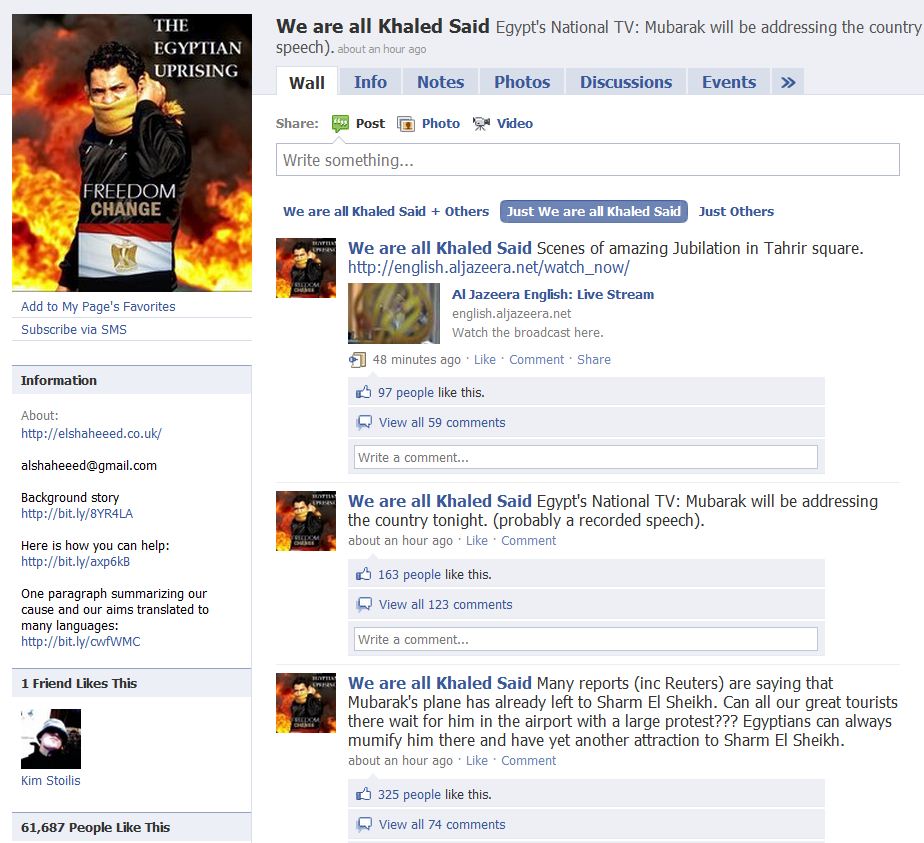
The recent uprisings in the Arab world took many by surprise. Perhaps it was the duration and the prevalence of authoritarian regimes in the region that made them seem immune to overturns, or it was the support provided to these regimes from the arms and technology rich countries of the first world. In either case, the uprisings opened up new possibilities for the populations in the Middle East, as they also provided a fertile ground of re-examination of social movement theories for scholars. The “leaderless-ness” of the uprisings seemed to distinguish them from their predecessors; the masses were on the streets but not in a familiar fashion. They seemed to be loosely connected political entities, individuals, maybe sharing some common features in terms of demographics like the unemployed or the youth. The role played by “social media” also sparked probably as much discussion as the uprisings themselves.
read more »
Posted in Activism, A_A in ENGLISH, Individual freedoms, Middle East, Politics, Public Sphere, World History, World Politics |
Leave a Comment »
December 9, 2011
by Talin Suciyan
Translated by Vartan Matiossian
Last week, Turkey’s Prime Minister Erdogan’s statement about Dersim was immediately well received in the mainstream press, and we had to wait until the weekend to read more critical articles about it. Two articles by Ayşe Hür and Prof. Taner Akçam were like an “introduction to the literature of apology,” especially for the Prime Minister himself.[1] There may be aspects in both articles that are worth discussing, but what I want to deal with now is something quite different.
First and foremost, by apologizing you cannot undo things that have already happened. In other words, no one can be cleared of a crime, or have himself/herself absolved of it, just because he/she apologized and expressed repentance, especially if it is a genocide – a crime that has achieved the purpose of annihilating a certain group of people in line with a carefully planned and organized manner. Apology is about repentance for a situation which is irreversible and the responsibility borne in connection with it. Be it an apology given to the people of Dersim, or Armenians, or Assyrians, or Pontic and Asia Minor Greeks, or the victims of systematic torture, or Alevis, or Kurds, an apology duly given is not an end in itself, but the beginning of an endless journey against regeneration of denial by the state and amongst the general public. This is because Turkey will never be the society that it was before 1915, just like Germany will never be the Germany
read more »
Posted in Armenian History, Armenian Politics, A_A in ENGLISH, History, Kurdish History, Kurdish Politics, Minority Rights, Politics, Turkish History, Turkish Politics |
Leave a Comment »
June 27, 2011
by elif gül tirben

30 May 2011
Contemporary art is a production that is born out of the social life and therefore, it inevitably reflects the visual culture formed by the society. However, in today’s world where the new is constantly produced and instantly consumed, and where resisting localities, alternative discourses and practices become a meta only to be united with the system, contemporary art bares the necessity to stay at a certain distance from the visual language that society creates. Furthermore, being a step ahead of the moment is also what “contemporary” necessitates and means:
read more »
Posted in Arts, A_A in ENGLISH, Conceptual Arts, Gastronomy - Food, Photography, Sculpture, Visual Arts |
2 Comments »
June 18, 2011
by Azad Alik
Hrach Bayadyan
 HETQ – There is no need to prove that the vast majority of who is photographed, in comparison to the photographer (and the other project authors) is on a very low level of existence, if we can ascribe any social level at all, say, to the Sarikecili tribe living in the Taurus Mountains. This difference consists of numerous composite elements, but in this case what is more important is who has the occasion to represent the other; to photograph and tell stories.
This privilege is a benefit to those who are looking for a new language “to make cultural diversity in Turkey visible and intelligible” via the Ebru project (one can also add controllable: knowledge/power relationship). At the same time, it is obvious that “cultural diversity”, deprived of historical-geographic depth – also through the magic word ebru – frequently becomes a euphemism for those ethnic, religious and social conflicts and contradictions that are in abundant supply in Turkey today.
Turkey’s European prospects, that Ebru wants us to believe, those ideas, values and beliefs related to this prospect that the project participants, in this or that way, identify themselves with, convey definite orientalist underpinnings to the project. The representation of ethnicities and their cultures as “reflections” remove them from the cultural context, depriving them of local traits and history. They need a western gaze to be represented, to validate their existence. According to Durak, it’s as if the people looking at his camera lens wanted to say, “We exist and we are here.” For Berger, those cultures (tribal groups) are equated to the elements of nature, where love and hate, the same and the other, the eternally repeating mix and transformation are “natural” prehistoric realities, free of social and political conflicts and objectives.
For more see: http://hetq.am/eng/articles/2070/
Posted in Arts, A_A in ENGLISH, Photography, Politics, Turkish Politics |
Leave a Comment »
 Ayda Erbal
 aysenbaylak
 Azad Alik
 AD
AD eminedeniz101
 emretoros
 Eren Barış
 gulseren adakli
 gunesasik
 Onur Yavuz
 ozge genc
 Talin Suciyan
 umuttumay