May 11, 2011
by Burcu Gürsel
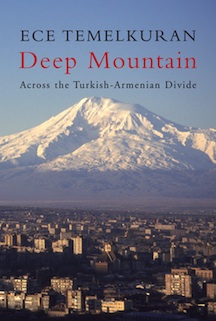
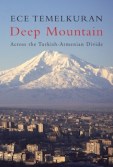 When Taleen Babayan’s interview with Ece Temelkuran, the author of Deep Mountain, first began circulating in a somewhat scholarly context, I took a deep breath, or sigh, and said “pass.” But it came back to haunt me.
My immediate readings then and now might touch as many nerves in others as Temelkuran’s own comments touched in me, but so be it for the moment. There will surely come a time when Turkey will graduate from producing books that speak on Armenians’ behalf or reduce them to the usual stereotypes—when the formula “good will + supposed hard work + good connections = (surprise!) success story” will no longer carry the day. On that utopian day, self-proclaimed pioneers will finally stop telling us that, thanks to their “ground breaking” (read: briskly selling) book, the Turkish people has at last faced up to a vital problem and learned how to cope with it for the very first time.
Or are we readers doomed to pick the very same card from the deck every single time?
read more »
Posted in Armenian History, Armenian Politics, A_A in ENGLISH, Literature, Minority Rights, Politics, Turkish History, Turkish Politics |
4 Comments »
May 10, 2011
by Azad Alik
 ALBATROS
Ragıp Zarakolu
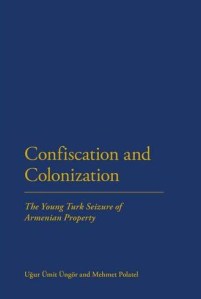
Armenian Weekly’de Uğur Üngör’ün “Müsadere ve Kolonizasyon: Jön Türklerin Ermeni Mülklerini Ele Geçirmesi” başlıklı önemli bir yazısı çıktı. Gerçekten de Türk burjuvazisinin ilkel birikim sürecine öncülük eden, Anadolu’daki tefeci bezirganlık, mütegallibe ve ağalığın derin kökleri 1915 ve sonrası politikalara dayanıyor. Geçenlerde Erol Özkoray da, soykırım inkarcılığının derin köklerine işaret etti.
15 Haziran 1915’te Kayseri’de halka açık yerlere asılan resmi duyuru’da şöyle deniyordu: “Bütün eşyalarınızı bırakın —mobilya, yatak yorgan, donanım. Dükkan ve işyerlerinizi kapatıp kilitleyin. Kaplarınız mühürlenecektir. Dönünce her şeyi geri alacaksınız. Mülklerinizi ya da değerli eşyalarınız satmayın. Alıcı ve satıcılar aynı şekilde cezalandırılacaktır. Paranızı yurtdışındaki bir akrabanız adına bankaya yatırın.Hayvanlarınız dâhil, sahip olduğunuz her şeyin listesini yapıp görevlilere teslim edin ki sonradan döndüğünüzde geri alabilesiniz. Buültimatomun gereklerini on gün içinde yerine getirmelisiniz .”
read more »
Posted in Armenian History, History, Turkish History |
Leave a Comment »
May 9, 2011
by Azad Alik
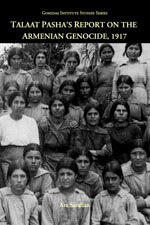
In 2008 Murat Bardakci, the Turkish journalist and historian, published a facsimile of a report on Ottoman Armenians from Talaat Pasha’s private archives. The report had been given to Bardakci by Talaat’s widow in 1982. In his own presentation of the untitled and undated report, Bardakci acknowledged that the materials he was presenting were open to interpretation. He called the report “A General Account of the Armenian Population after the Population Transfer [Tehcir] (possibly 1915-1916).”[1] Bardakci’s work was somewhat derided by Turkish nationalist historians and generally ignored by others.[2]
A more recent study re-examined Talaat’s report using Ottoman records for a completely different interpretation. The new study identified sufficient evidence that Talaat’s report was based on a special survey he had ordered in February 1917 and it produced some of the reports that appear to have been produced after the survey was ordered. These reports, from the Turkish archives, showed identical or near identical statistics to Talaat’s report.
read more »
Posted in Armenian History, A_A in ENGLISH, History, Turkish History |
Leave a Comment »
May 8, 2011
by Azad Alik
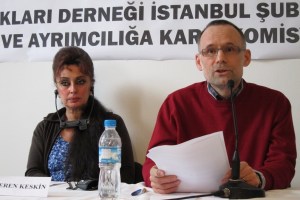 Hans – Lukas Kieser
A book title like The Missed Peace, as I had entitled my book eleven years ago, inevitably raises the question about a peace to be won.
In this talk, dear audience, I would like to say a few words on the sources, topics and the human rights perspective of The Missed Peace, and first on how I came to write it.
While studying history in Basel in the 1980s, I was confronted with unrest in Turkey at the time because I met refugees of my own age who had fled the military junta of 1980, not a few of whom had been tortured. More generally, I met a number of migrant families who had fled situations devoid of prospects for the future in eastern Anatolia and elsewhere.
read more »
Posted in Armenian History, Armenian Politics, A_A in ENGLISH, History, Politics, Turkish History, Turkish Music, Turkish Politics, World History, World Politics |
1 Comment »
 Ayda Erbal
 aysenbaylak
 Azad Alik
 AD
AD eminedeniz101
 emretoros
 Eren Barış
 gulseren adakli
 gunesasik
 Onur Yavuz
 ozge genc
 Talin Suciyan
 umuttumay
 When Taleen Babayan’s interview with Ece Temelkuran, the author of Deep Mountain, first began circulating in a somewhat scholarly context, I took a deep breath, or sigh, and said “pass.” But it came back to haunt me.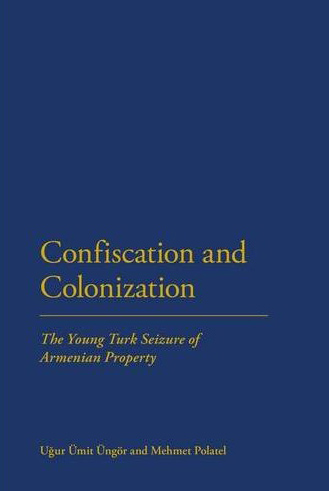
 Azad Alik